Выпуск
Ghosts Across the Thames — A Tale of the Past, Present, and Future of the Human in the Machine Reflections from Infosecurity Europe 2026 | Written by Marco Ciappelli & Read by Tape3
An Analog Brain In A Digital Age | With Marco Ciappelli · 3 июля 2026 г. · 20 мин
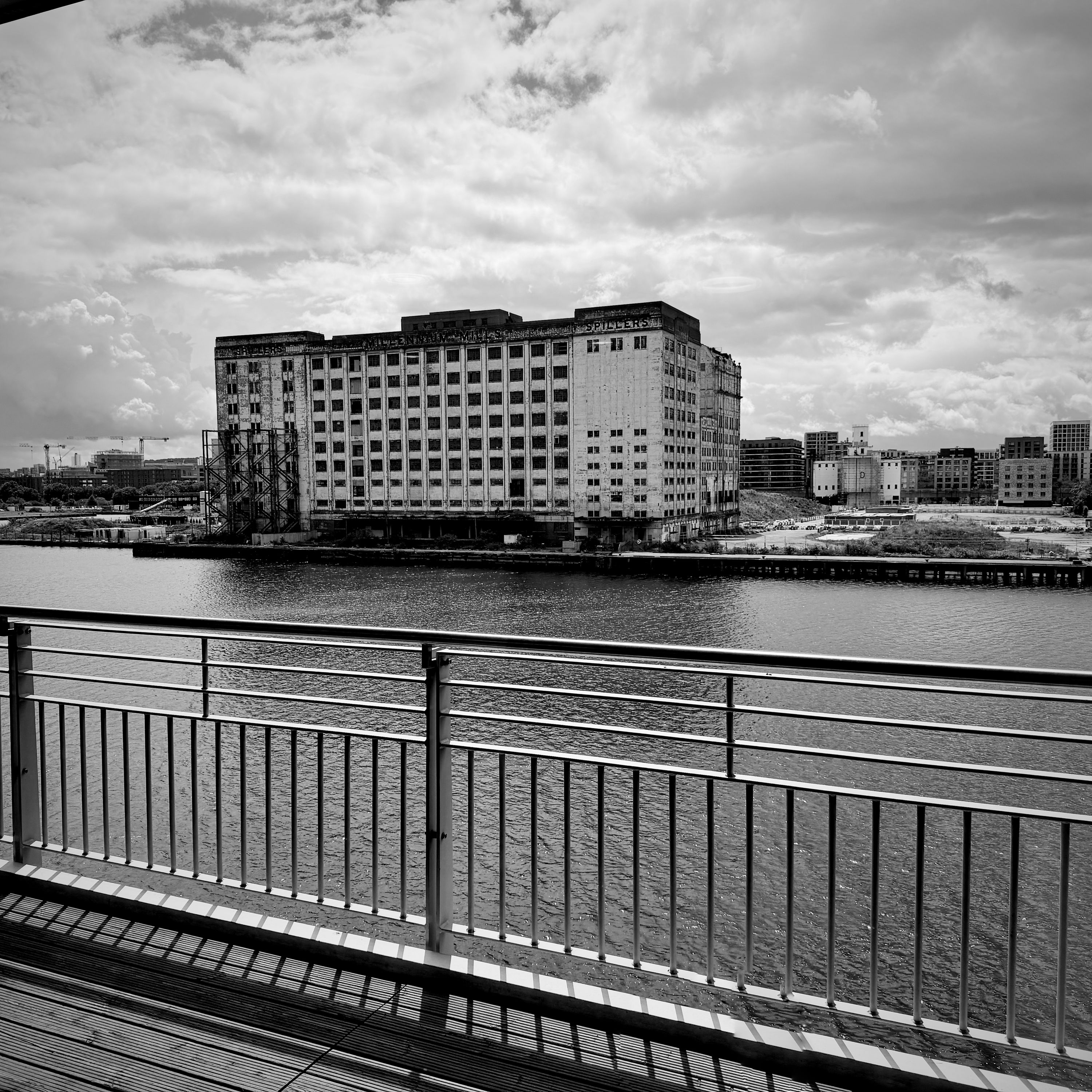
Ghosts Across the Thames — A Tale of the Past, Present, and Future of the Human in the Machine Reflections from Infosecurity Europe 2026 — on sovereignty, agentic AI, burnout, and the stubborn human being still sitting at the center of all of it By Marco Ciappelli | On Location at Infosecurity Europe 2026, with Sean Martin July 2026 No time to read? No problem. Let my Artificial Intelligence companion, TAPE3, read it to you — it's got a voice, and a bit of attitude too. 🎙️🤖 Just like me… but with better pronunciation. 🤣 😅 There is a building across the Thames from the Infosecurity press room, a derelict flour mill called Millennium Mills that looks exactly as haunted as it sounds. For three days I kept glancing at it between conversations — broken windows, whole panes gone, a slow architectural decay staring back at a hall full of the anxieties of the digital age. We made a joke, the way you do at the end of a long week, that the ghosts in there might be watching us. Alan Turing, who taught us to ask whether a machine could think at all. Ada Lovelace, who saw what the general-purpose machine could become a full century before it worked and, in almost the same breath, insisted it could originate nothing — the first person to draw the line we are still arguing over. It was raining, the trains were on strike, and a few hundred meters away several thousand people had gathered to argue about the future of the machines those ghosts imagined. I have covered enough of these events to know when a room is telling me something. This one was telling me it had sped up. That was the first thing about the floor, before any single topic: the clock. The story everyone told, in one form or another, was the collapse of time. An intrusion that once took hours to hand off from one criminal crew to the next now does it in seconds, faster than you can decide whether to answer a ringing phone. Attacks are being weaponized in the time it takes to make coffee. Norbert Wiener, who gave us the very word under all the signage — cybernetics, the study of control and communication in the animal and the machine — warned three-quarters of a century ago about handing our decisions to systems faster than we could follow. His ghost would have recognized the floor instantly. And so the defense has to move at that speed too, which forces a question the industry has spent years politely avoiding: if no human can keep pace, what exactly is left for the human to do? The answers filled the booths. Agentic AI, autonomous agents patrolling the network and making decisions on their own. The same agents reframed, a beat later, as the newest insider threat — trusted credentials, no psychology to exploit, no hesitation to catch. Shadow AI, the quiet reality that people across every organization are already using tools nobody sanctioned. E.M. Forster wrote that story in 1909, in "The Machine Stops": a civilization so dependent on a system it no longer understands that when the system falters, no one remembers how to live. Quantum computing described not as a distant weather system but as a theft already in progress, encrypted data harvested today to be opened later. If you only read the signage, you would think the entire human contribution to security had been reduced to signing the purchase order. But I did not spend my week reading signage. And here the mood matters, because moods are data too. My friend Madelein van der Hout ( https://youtu.be/uEbnXj4ZWqc ), the Forrester analyst who this year joined us as a kind of friendly ghost of her own, beaming in from the Netherlands rather than London, put it more precisely than I could. A few weeks earlier, at RSAC Conference in San Francisco, the drumbeat had been resilience, and the air was thick with everything technology can do, go