Выпуск
The Schmidt Observatory System unlocking the Transient Universe
Multi-messenger astrophysics · 27 июля 2026 г. · 21 мин
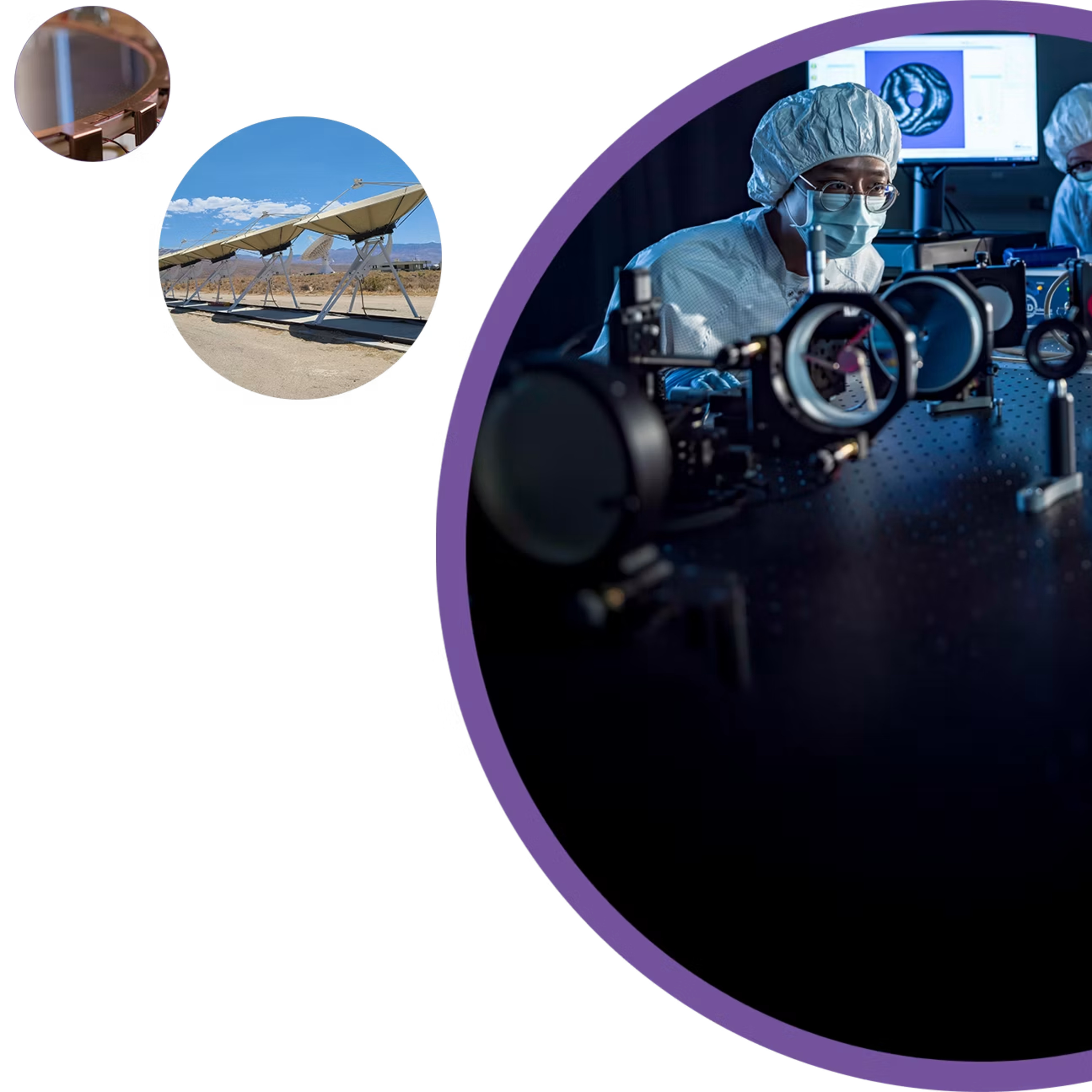
In this episode, we dive into the Eric and Wendy Schmidt Observatory System, a groundbreaking initiative designed to pioneer a new paradigm for astronomical research through rapid development, modular designs, and a commitment to open data. We explore the system's four major next-generation facilities: the Argus Array, the Deep Synoptic Array (DSA), the Large Fiber Array Spectroscopic Telescope (LFAST), and the Lazuli Space Observatory. Our discussion highlights how these facilities act as a comprehensive end-to-end system capable of discovering and rapidly characterizing transient events. We focus on two thrilling examples of what this network will achieve: Gamma-Ray Burst (GRB) Prospects: The Argus Array (optical) and the DSA (radio) will serve as ultimate discovery engines, serendipitously detecting hundreds of GRB afterglows per year. This completely bypasses the limitations of targeted follow-up observations, finally providing scientists with an unbiased sample of these massive cosmic explosions across their entire lifecycle. Multi-Messenger Astronomy: We examine how the system will hunt for the electromagnetic counterparts to gravitational wave events, such as neutron star mergers (kilonovae). The Lazuli Space Observatory's rapid-response architecture will allow it to slew and capture its first photons in under four hours (with best-case scenarios under 90 minutes), providing critical early-time optical and near-infrared spectroscopy before these fast-fading transients disappear. Tune in to learn how this interconnected network of observatories is closing the gap between discovery and follow-up, ensuring we never miss the universe's most fleeting and energetic events! References Discussed in this Episode: Freeburn, J., et al. (2026). "Prospects for GRB Afterglow Discovery with the Eric and Wendy Schmidt Observatory System". Wevers, T., et al. (2026). "The Lazuli Space Observatory: Opportunities for time-domain and multi-messenger astronomy". Acknowledements: Podcast prepared with Google/Gemini Notebook. Illustration credits: Schmidt Sciences