Выпуск
#728 Mastering the Short Wedge: Stability Through Rotation and Radius
eCoach360°: The Global Platform for Innovative Technologies and Teaching Concepts. · 3 октября 2026 г. · 21 мин
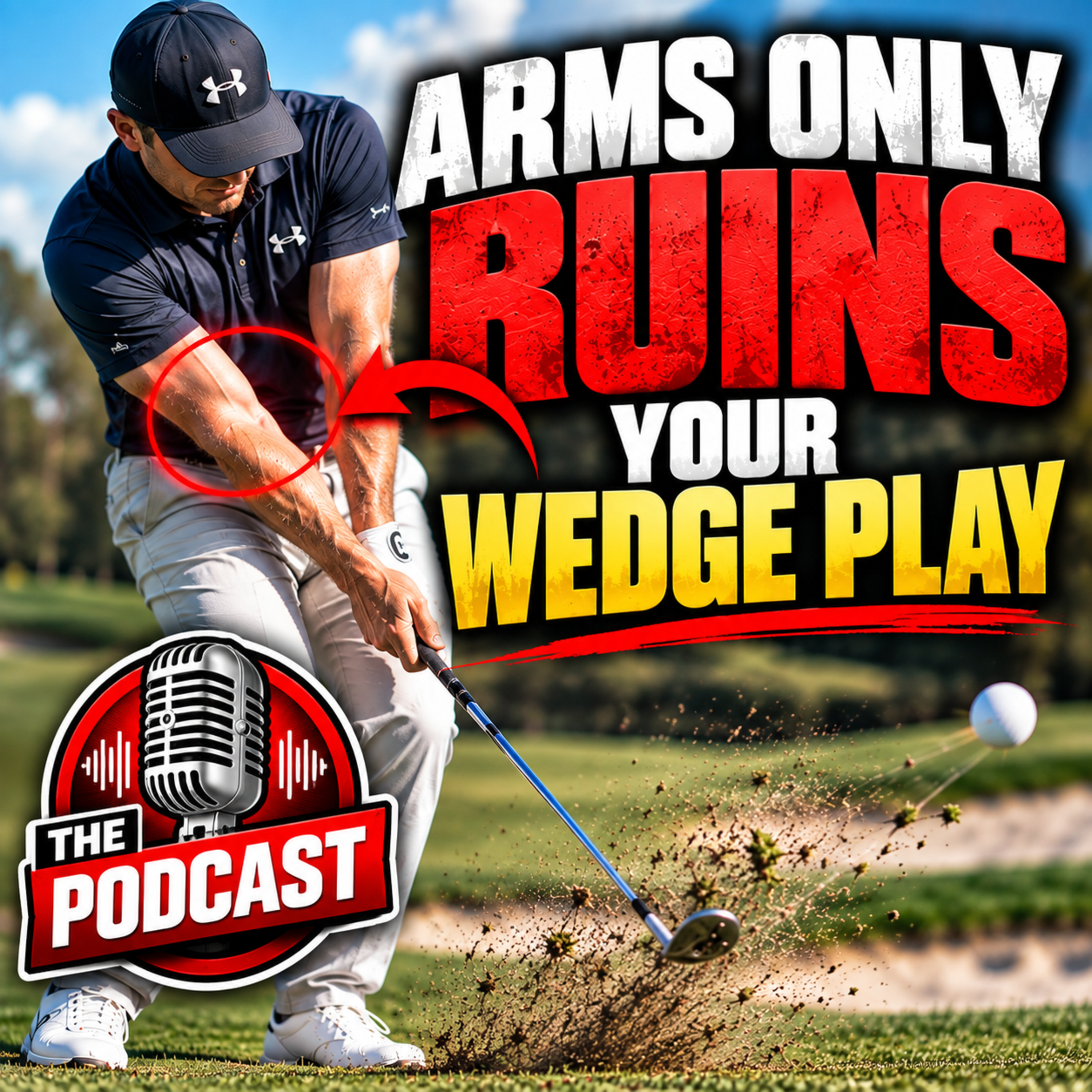
Why “Arms Only” Is Ruining Your Wedge Play Many golfers believe 30–50-yard wedge shots should be played mainly with the arms while keeping the body quiet. Biomechanically, this often creates the opposite of control. When body rotation disappears, the arms must independently manage speed, radius and timing—making contact less predictable. Compact Doesn’t Mean Narrow A good wedge swing is compact, but it still maintains width. The chest, arms and hands should move as a coordinated system. If the hands travel independently while the trail elbow folds excessively, the swing radius collapses. The trail elbow is an important diagnostic marker. Elite players may build approximately 75–76° of trail-elbow flexion , while amateurs can reach around 130° . Excessive folding pulls the hands inward and creates a “shorten-then-lengthen” pattern. The golfer must then re-extend the arm perfectly during the downswing. Too early and the club can hit behind the ball; too late and thin contact becomes likely. Elite players begin widening the trail arm early in the downswing, helping stabilize the radius. Let the Body Be the Engine For a compact wedge backswing, approximately 25–35° of chest rotation can provide a useful coaching window: Chest rotates → arms travel with the torso → trail elbow folds gradually. When the chest stops and the arms continue alone, the elbow can collapse behind the body. The golfer must then compensate. One reaction is to spin out , pulling the handle forward, steepening the strike and exposing the leading edge. Another is to hang back , moving the low point behind the ball and producing heavy contact. Fat and thin shots can therefore originate from the same unstable backswing structure. Low Point and Bounce Great wedge play is about predictable low-point control—not maximum shaft lean. A stable radius allows the wedge’s bounce to interact naturally with the turf and increases the margin for error. WatchItGolf can help identify these patterns by measuring parameters such as trail-elbow flexion, chest rotation, pelvis movement, shaft lean and hand movement. A simple practice feel is: “Chest moves the arms.” Keep the motion compact, maintain width and let body rotation organize the swing rather than allowing the arms to manufacture the strike. KEEP THE RADIUS STABLE. OWN YOUR WEDGE CONTACT. My Blog The Explainer www.ecoach360.com