Выпуск
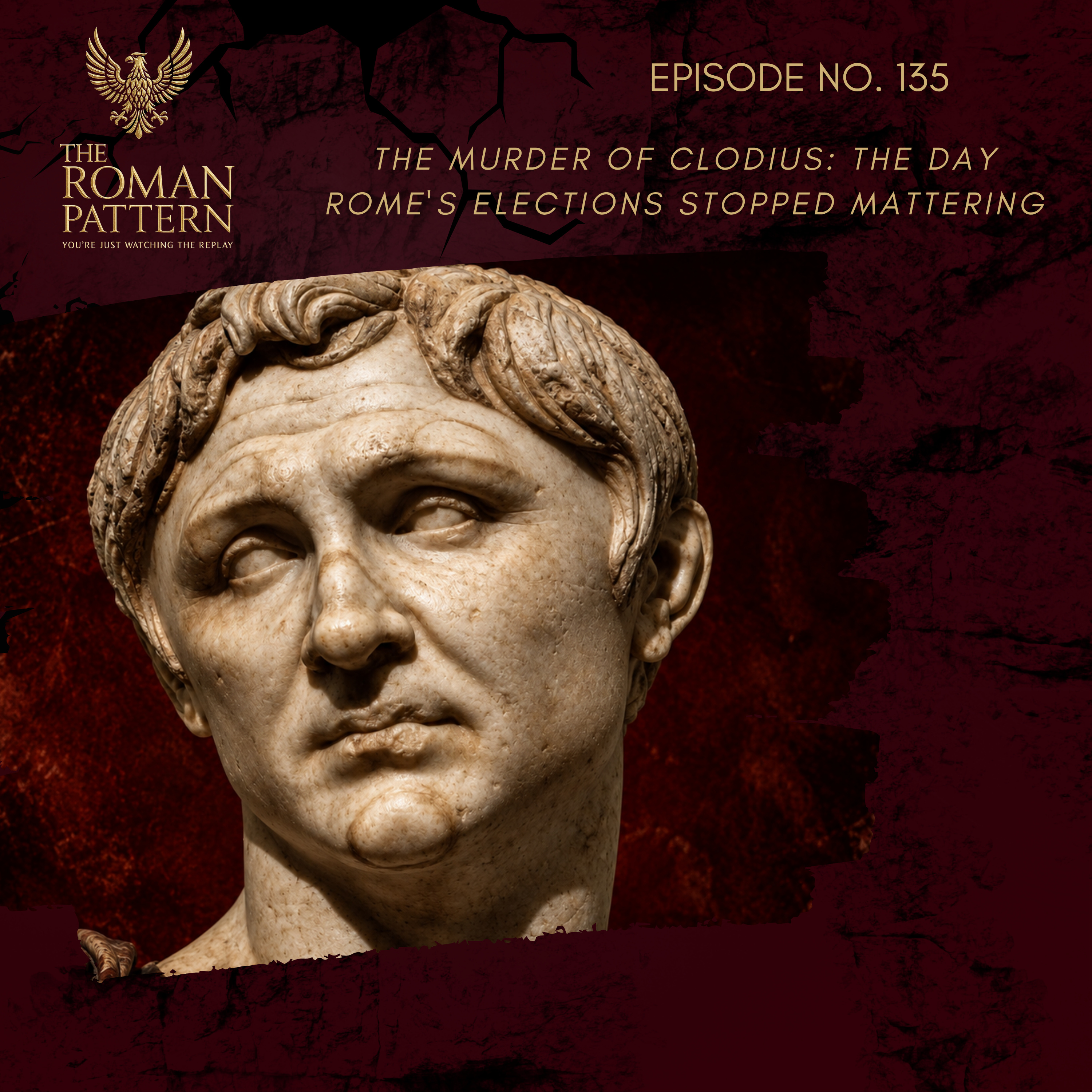
The Murder of Clodius: The Day Rome's Elections Stopped Mattering
The Jeremy Ryan Slate Show · 26 октября 2026 г. · 27 мин
Publius Clodius Pulcher was killed on the Appian Way in January of 52 BC, his supporters burned the Senate House around his body, and within weeks Bibulus and Cato the Younger proposed making Pompey the Great sole consul of Rome. This episode follows the four years that led there. In 55 BC armed men attacked Lucius Domitius Ahenobarbus on his way to the consular elections and killed his torchbearer, and Pompey came home from the elections for aedile with blood on his toga. In 54 the consuls struck a secret deal with two candidates, Gaius Memmius and Gnaeus Domitius Calvinus, trading their support for perjured testimony, and Cicero writes that so much money was borrowed to buy votes that the interest rate in Rome doubled. Memmius read the agreement out in the Senate, the elections collapsed, and Rome began 53 with no consuls at all. By 52 the city had two private armies, one led by Clodius and one by Titus Annius Milo. After Clodius was killed near Bovillae, the Senate passed its emergency decree, and the men who had spent years resisting Pompey gave him an office Rome had never had, a consulship with no colleague. Pompey passed new laws against violence and bribery, ringed the forum with soldiers for Milo's trial, and then passed a law on magistrates that put Caesar's right to run from Gaul in doubt until he added an exception for him. Most of what we know about the killing comes from Asconius, who went back to the official records a century later, and his commentary on Cicero's speech for Milo is the best way to compare Cicero's version with the record. Fall of the Republic series: Tiberius Gracchus • Marius • The Social War • Sulla • Spartacus • The Men Who Bought the Republic • Pompey • Julius Caesar • The Secret Deal That Ended the Roman Republic • The Day Rome's Elections Stopped Mattering (you are here) • The Last Stand of the Roman Republic • The Ides of March • Cicero • The Pattern: How Republics Really Die Next: The Last Stand of the Roman Republic, from the Rubicon on January 10, 49 BC, through Pharsalus and Munda. The Money, Borders, Power framework primer is episode 115. CHAPTERS 00:00 The year Rome's elections stopped deciding anything 01:42 Welcome back 02:49 Violence at the elections of 55 BC 06:16 The bribery scandal of 54 BC 09:14 A year with no consuls 11:00 Clodius, Milo, and the murder on the Appian Way 14:19 The Senate House burns 16:05 Pompey becomes sole consul 19:26 Pompey's laws and the trial of Milo 21:47 The law that let Caesar run from Gaul Sources: Asconius, Commentary on Cicero's Pro Milone; Cicero, Pro Milone, Letters to Atticus 4.15 to 4.18, and Letters to His Brother Quintus; Plutarch, Lives of Pompey and Cato the Younger; Appian, Civil Wars 2.19 to 2.25; Cassius Dio, Roman History, Books 39 and 40; Suetonius, The Deified Julius 26 to 28. Modern: Ronald Syme, The Roman Revolution (1939); Erich Gruen, The Last Generation of the Roman Republic (1974).