Выпуск
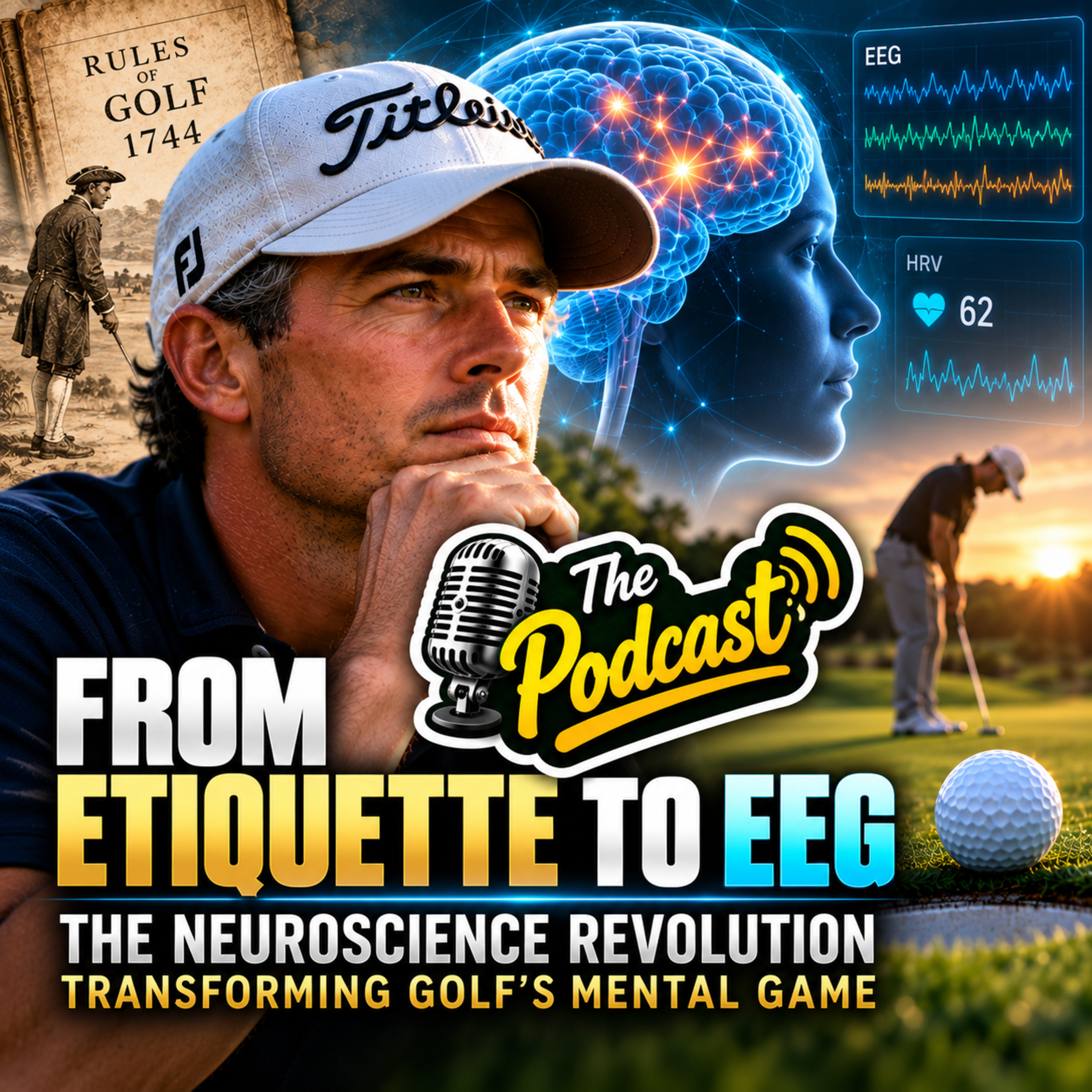
#755 From Etiquette to EEG: The Neuroscience Revolution Transforming Golf’s Mental Game
eCoach360°: The Global Platform for Innovative Technologies and Teaching Concepts. · 30 октября 2026 г. · 23 мин
Golf has always challenged the mind. But how did the sport evolve from Scottish etiquette to measuring brainwaves? Psychology, biometric sensors, and AI are changing how golfers manage pressure and concentration. Here are five breakthroughs. 1. Etiquette: Golf’s First Mental Training Long before sports psychology, golf demanded patience, honesty, and emotional control. The 1744 Rules of Golf, established by the Gentlemen Golfers of Edinburgh, emphasized fair play. Respecting opponents and accepting responsibility encouraged discipline and self-regulation. What began as etiquette helped shape golf’s mental traditions. 2. Why Score Obsession Hurts Performance Thinking constantly about winning can undermine execution. Under pressure, worry occupies working memory. Golfers may start consciously controlling movements that normally run automatically, disrupting their swing or putting stroke. In his 1995 book Golf Is Not a Game of Perfect, sports psychologist Dr. Bob Rotella emphasized preparation, commitment, and process over outcomes. The lesson: Make your decisions, commit to the shot, and stop trying to control the result. 3. Small Routines, Big Benefits Mental training does not need to be complicated. Three practical strategies can improve consistency: Pre-shot routines: Breathing, target selection, and visual focus create a repeatable preparation sequence. Self-talk: Short cues such as "trust your swing" redirect attention from worry. Mental imagery: Visualizing ball flight and execution supports preparation and confidence. These habits help manage attention and reduce unnecessary conscious interference. Decide before the shot. Then execute. 4. EEG and HRV: Measuring Mental States Technology is bringing physiological feedback into mental training. Heart Rate Variability (HRV) measures changes in the intervals between heartbeats. Combined with breathing exercises, HRV feedback may help golfers regulate arousal. Electroencephalography (EEG) records electrical activity in the brain. Devices such as Muse and FocusBand offer neurofeedback linked to attention-related activity. Researchers are studying how patterns such as alpha activity relate to concentration and skilled movement. But there is no universal "perfect brainwave" for golf. The breakthrough is not reading a golfer’s thoughts. It is using measurable signals to guide training. 5. Could AI Become Your Mental Coach by 2030? Future systems may combine AI, wearable sensors, and virtual reality. Imagine technology detecting changes in physiological arousal and suggesting breathing exercises or adjustments to pre-shot routines. VR could simulate crowds, difficult conditions, and tournament pressure. Personalized coaching and integrated biometric feedback are promising possibilities, not guaranteed developments. More advanced neural technologies could also raise questions about fairness and cognitive enhancement. Conclusion: The Mind Meets Measurement From 1744 etiquette to sports psychology, EEG, HRV, and AI, golf’s mental game keeps evolving. Yet the essentials remain: attention, emotional control, preparation, and commitment. Technology can provide feedback. The golfer still has to execute. On your next crucial putt, will you trust instinct alone—or use science to understand your mental game? My Blog The Ex