Выпуск
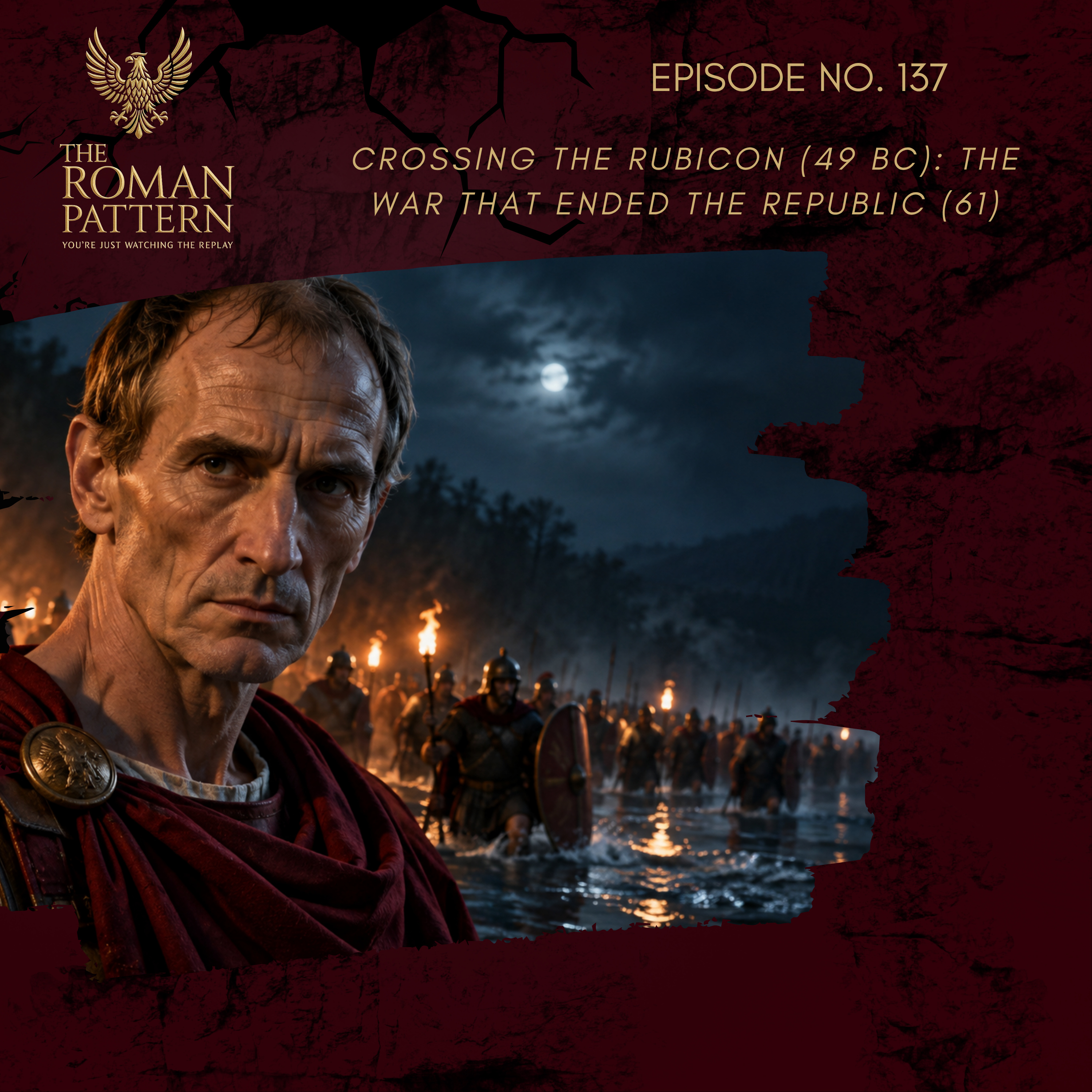
Crossing the Rubicon (49 BC): The War That Ended the Republic (61)
The Jeremy Ryan Slate Show · 2 ноября 2026 г. · 36 мин
Julius Caesar crossed the Rubicon in January of 49 BC, and over the next four years his civil war against Pompey the Great and the Senate ran from Italy to the battles of Pharsalus in 48 BC, Thapsus in 46 BC, and Munda in 45 BC, where the last army fighting in the Republic's name was destroyed. Weeks before the crossing, on December 1, 50 BC, the Senate voted 370 to 22 for Caesar and Pompey to give up their armies together, and the consul Gaius Claudius Marcellus set the vote aside. A small group of hardliners held the procedure of the chamber, and on January 7, 49 BC they passed the final decree against Caesar. The tribunes Mark Antony and Quintus Cassius fled north to him, and Caesar crossed with one legion. This episode follows what came after the river. Pompey and the consuls abandoned Rome and left the treasury behind. Caesar pardoned Domitius Ahenobarbus at Corfinium and called mercy a new way of conquering, then threatened to kill the tribune who stood at the treasury doors. He beat Afranius and Petreius in Spain, risked everything crossing to Greece, nearly lost at Dyrrachium, and broke Pompey's cavalry at Pharsalus with a hidden fourth line. Pompey was murdered on the beach at Pelusium, and Caesar wept when he was handed his signet ring. Cato read Plato through the night at Utica and chose death over Caesar's pardon. By 45 BC every institution that existed before the Rubicon was still standing, and every one of them operated with the permission of the man who had won. Caesar's own account of the war never mentions the Rubicon, so I'd encourage you to read his Civil War next to Plutarch's lives of Caesar, Pompey, and Cato and notice where Caesar goes quiet. This is Episode 137 of The Roman Pattern. The Money, Borders, Power framework primer is episode 115. CHAPTERS 00:00 The Republic outlived the Rubicon by four years 01:29 Welcome back 03:05 When did Caesar's command run out? 05:39 The Senate votes 370 to 22 for peace 07:18 The final decree and the tribunes flee 08:21 Crossing the Rubicon, January 49 BC 12:23 Pompey abandons Rome and Caesar's mercy at Corfinium 14:35 Seizing the treasury and paying for the war 19:22 Dyrrachium and the Battle of Pharsalus (48 BC) 24:20 Pompey's murder in Egypt 26:19 Thapsus, Cato at Utica and Munda 32:51 The Republic still standing, on one man's permission SOURCES Sources: Caesar, The Civil War; Plutarch, Lives of Caesar, Pompey, and Cato the Younger; Suetonius, The Deified Julius; Appian, Civil Wars, Book 2; Cicero, Letters to Atticus; The African War and The Spanish War (by officers of Caesar); Cassius Dio, Books 41 to 43. Modern: Adrian Goldsworthy, Caesar: Life of a Colossus (2006); Robert Morstein-Marx, Julius Caesar and the Roman People (2021); Ronald Syme, The Roman Revolution (1939).