Выпуск
Simulating Rainfall For Daily Vermiculture Worm Compost Tea Harvesting | 11
Tactical Ecology · 3 ноября 2026 г. · 23 мин
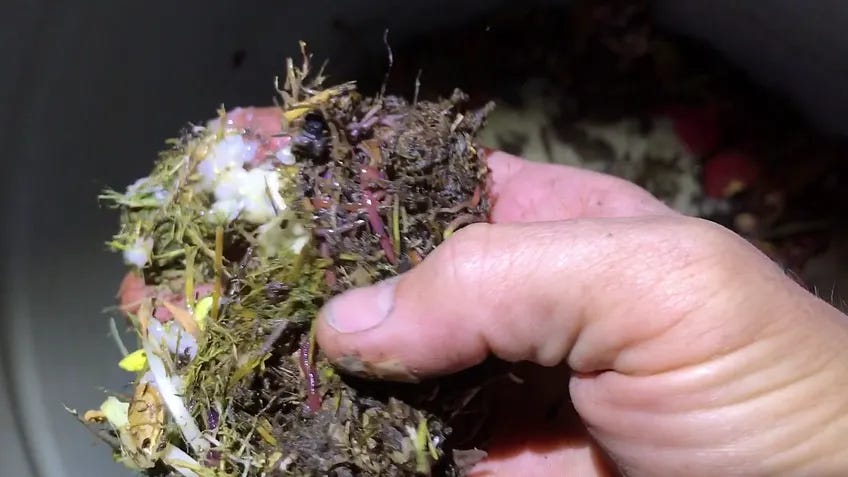
This is an update on my evolution in the process of vermiculture, or red wiggler composting worms, making the manure and using it as fertilizer. The more interesting dynamic is to create the compost tea product, or what some people call worm juice, which is, you might consider it a tonic for plants. It has many benefits, including adding a sort of slurry of nutrient that’s biologically enhanced by the digestive process of the worms. And it’s basically breaking down all of the food scraps, usually from the kitchen. If you’re doing the worm composting for your kitchen scraps, your green waste, typically avoiding meat and dairy, not because they’re unable to consume them as they break down, but because it tends to attract rodents and other pests and have potentially foul orders in the process of breaking down. So most people just preferentially avoid doing that because it’s a small scale, and some people even do it under their sink or even on their counter tops with different devices for this. But if you’re at the farm scale, you probably can get away with putting more things in there, in the system. But for the most part, they have some foods that they would avoid. It could be harmful to them. Spicy foods, acidic foods, mainly, I’ve read lists of things not to include, and some of them can be so exhaustive that there’s almost nothing left you can feed them. I’ve tended to lean towards just not excessively introducing food scraps that would be harmful to them. Therefore, if there’s a small amount that they would just prefer to avoid, as long as there’s plenty of places for them to go to avoid it, then eventually it will just rot down on its own and be less harmful, if not, if not no longer harmful at all. So the more the merrier, in terms of the volume of the system, in my opinion. But I’ve built a number of these, a number of different ways, small, tiny ones, large ones, and indoor, outdoor all scales, pretty much then there are larger scales that I would like to get to eventually. But for now, the most workable, most human scale operation for a typical gardener is gonna be something even as small as a five gallon bucket, but on from there, the large plastic totes. However, for me personally, I’m trying to avoid plastic. So I’ve gone with terra cotta pots for my own aesthetic and done very well, it costs quite a bit more money to get those at a large enough scale for it to work the way you want it to. To me, it’s worth it, and maybe you can source similar things for free. The idea is, if you have the right size container for the scale you’re operating, at making sure that their needs are met in the design of the container, that there’s ventilation holes or airflow aeration of some kind, so doesn’t lose all oxygen and drainage. So that the leachate from the waters, the moisture in the food as it gets broken down by the worms. That leachate or that runoff is gonna need to go somewhere, because it’ll just create what’s called anaerobic digestion bog at the bottom of the container, which will have a foul odor, and it will be noxious to the worms. A lot of people would argue it would spoil the product of the compost that you’re trying to harvest, and it would make it even in some ways, harmful to plants. There are people who advocate for a sort of paradigm shift that would integrate so called anaerobic compost products. I’m not an expert in that, and certainly to me, it’s just so foul. I’d rather avoid it and stick with a more aerated type of product. Another value to this, taking a side note here, is that whereas if you were doing what’s called thermophilic composting, and you have a large compost pile, then you have to heat it to a certain temperature in order for the composting process, the thermophilic composting process to work. You’re favoring the use of temperatures to kill pathogens and