Выпуск
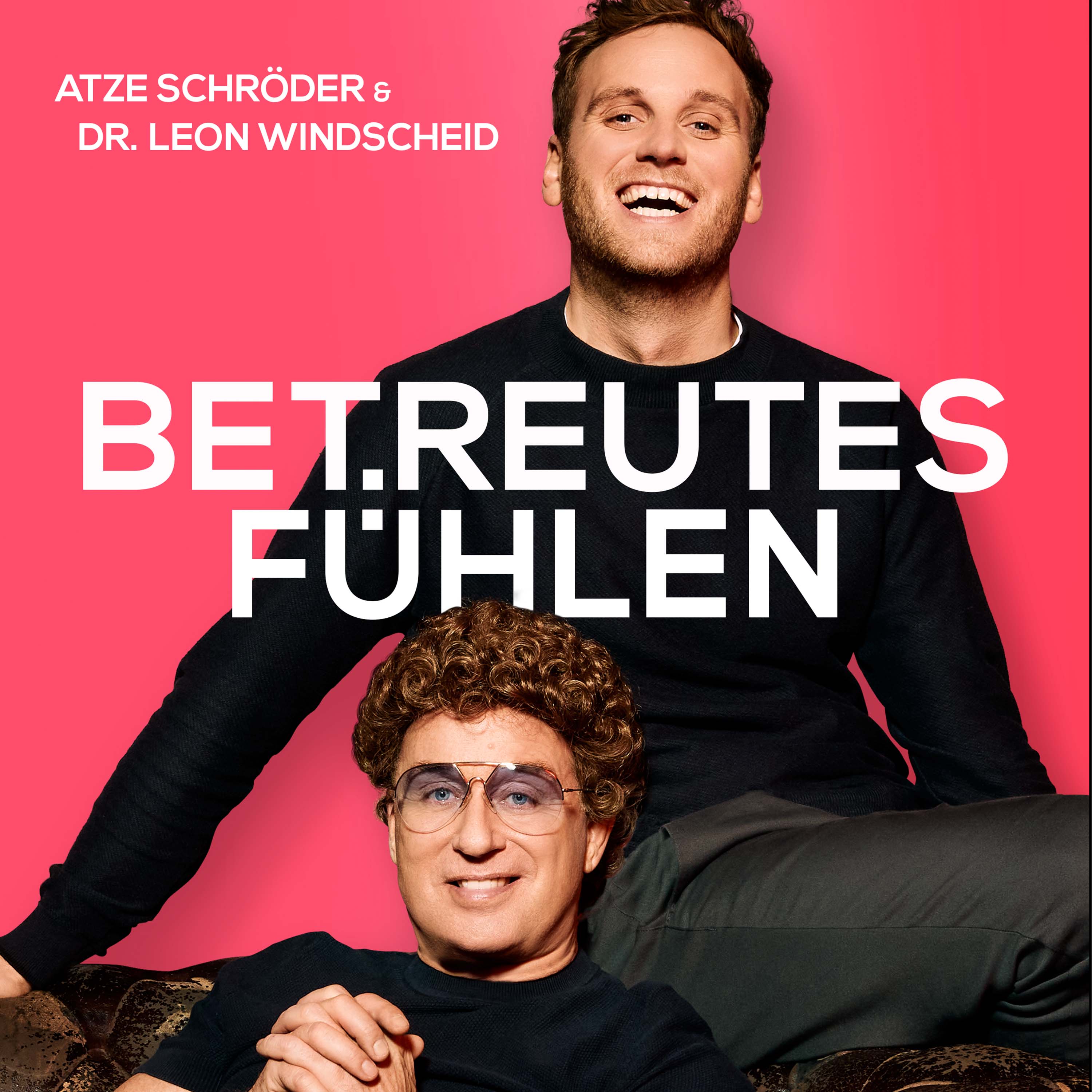
Das Riesenrad der Gefühle - wie wir fühlen lernen
Betreutes Fühlen · 9 ноября 2026 г. · 1 ч 11 мин
Betreutes Fühlen Stell dir vor, es gäbe in der Schule ein Fach namens „Fühlen“. Was hätten wir dort lernen sollen? Und was hätten wir gerne schon als Kinder über unsere Gefühle gewusst? In dieser Folge sprechen Atze und Leon über fünf Wahrheiten, die eigentlich jedes Kind kennen sollte – und die auch uns Erwachsenen manchmal noch ziemlich schwerfallen. Mit persönlichen Geschichten, spannenden Erkenntnissen aus der Psychologie und einer wichtigen Botschaft: Wir müssen nicht lernen, immer richtig zu fühlen. Sondern besser zu verstehen, was in uns vorgeht. Eine Folge für alle, die mal Kinder waren. Und für alle, die heute welche begleiten. Leon & Atze Instagram: https://www.instagram.com/leonwindscheid/ https://www.instagram.com/atzeschroeder_offiziell/ Mehr zu unseren Werbepartnern findet ihr hier: https://linktr.ee/betreutesfuehlen Tickets: Atze: https://www.atzeschroeder.de/#termine Leon: https://leonwindscheid.de/tour/ Leons Kinderbuch: https://www.rowohlt.de/buch/dr-leon-windscheid-das-riesenrad-der-gefuehle-9783498009892?srsltid=AYCX9vLfPkT8dPwrwvA7TLxIH0TfaSh1sjrynY_BGqVDaUmpBo_LP9-F Quellen Barrett, L. F. (2017). The theory of constructed emotion: An active inference account of interoception and categorization. Social Cognitive and Affective Neuroscience, 12(1), 1–23. https://doi.org/10.1093/scan/nsw154 Chen, M. S., Cai, Q., Omari, D., Sanghvi, D. E., Lyu, S., & Bonanno, G. A. (2025). Emotion regulation and mental health across cultures: A systematic review and meta-analysis. Nature Human Behaviour, 9(6), 1176–1200. https://doi.org/10.1038/s41562-025-02168-8 Dunn, B. D., Burr, L. A., Smith, H. B., Hunt, A., Dadgostar, D., Dalglish, L., … Werner-Seidler, A. (2018). Turning gold into lead: Dampening appraisals reduce happiness and pleasantness and increase sadness during anticipation and recall of pleasant activities in the laboratory. Behaviour Research and Therapy, 107, 19–33. https://doi.org/10.1016/j.brat.2018.05.003 Fernandes, M. A., & Tone, E. B. (2021). A systematic review and meta-analysis of the association between expressive suppression and positive affect. Clinical Psychology Review, 88, 102068. https://doi.org/10.1016/j.cpr.2021.102068 Gross, J. J. (2015). Emotion regulation: Current status and future prospects. Psychological Inquiry, 26(1), 1–26. https://doi.org/10.1080/1047840X.2014.940781 Paredes-Mealla, M., Martinez-Borba, V., Miragall, M., Garcia-Palacios, A., Baños, R. M., & Suso-Ribera, C. (2023). Is there evidence that emotional reasoning processing underlies emotional disorders in adults? A systematic review. Current Psychology, 42(32), 28738–28754. https://doi.org/10.1007/s12144-022-03884-4 Scherer, K. R., & Moors, A. (2019). The emotion process: Event appraisal and component differentiation. Annual Review of Psychology, 70(1), 719–745. https://doi.org/10.1146/annurev-psych-122216-011854 Shen, X., Anderson, R. A., & Pizarro, D. A. (2025). People judge third-party anger as a signal of moral character. Journal of Experimental Social Psychology, 120,